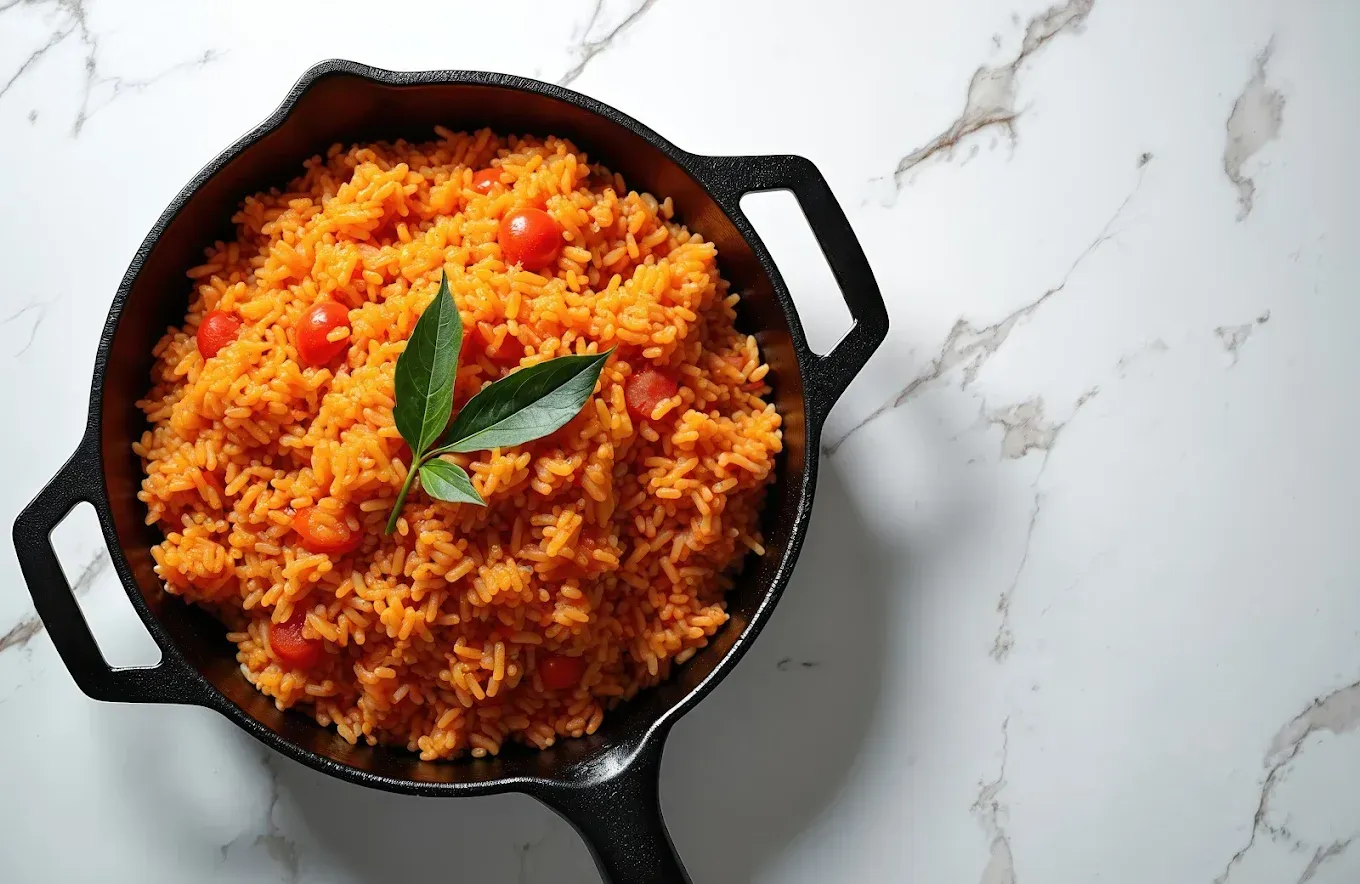
Ask a Nigerian, Ghanaian or Senegalese person about jollof rice and you may get a very confident answer. Ask which country makes the best jollof and things can get even more interesting.
Jollof rice has become one of West Africa's best-known dishes, and its popularity has travelled far beyond the region. You can now find versions of jollof across the African diaspora, including restaurants in cities such as Windsor, Ontario.
For someone new to Nigerian food, however, one question usually comes first: What exactly is jollof rice?
The answer takes us into West African history, regional cooking traditions and one of the world's friendliest food rivalries.
What Is Jollof Rice?
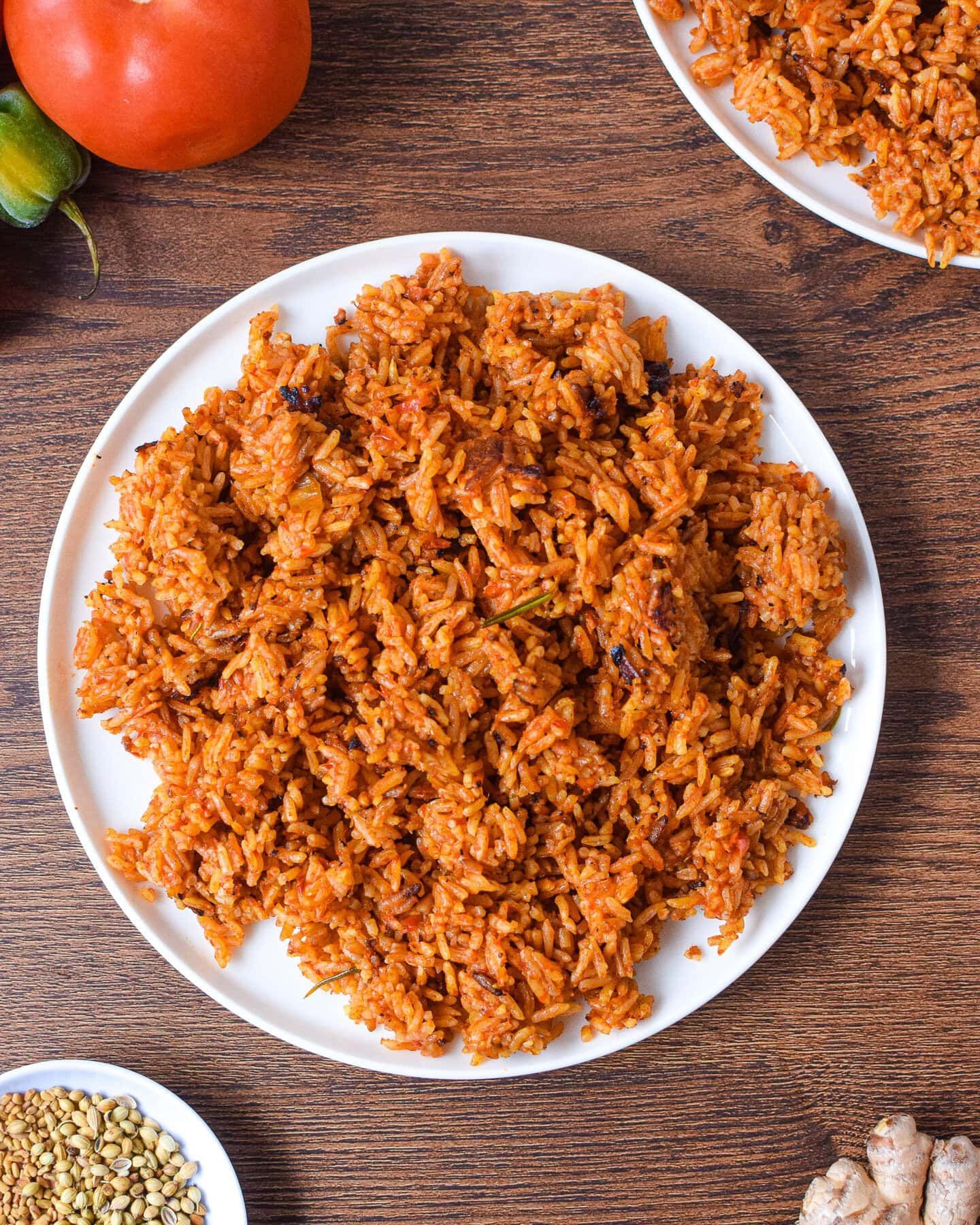
Jollof rice is a West African rice dish typically prepared by cooking rice in a seasoned tomato and pepper base.
The recipe sounds straightforward, but the flavour can vary considerably depending on the country, cook and cooking method.
Nigerian jollof often uses long-grain rice, tomatoes, peppers, onions and spices. Ghanaian jollof has its own approach to rice, seasoning and preparation. Senegal and The Gambia have closely related traditions, including dishes such as ceebu jën and benachin.
So there isn't one universal jollof rice recipe. There is a family of related West African dishes.
Where Did Jollof Rice Come From?
The history of jollof rice points toward the Senegambian region of West Africa and the Wolof people.
The name "jollof" is generally linked to the Wolof people and the historic Jolof Empire, which existed in parts of present-day Senegal and The Gambia. Food history gets complicated here because dishes change as people move, trade and exchange ideas.
Rather than thinking of jollof as something invented in one kitchen and then copied by everyone else, it makes more sense to see it as a West African food tradition that developed and changed across communities.
Senegal's ceebu jën provides important historical context. The dish combines rice, fish and vegetables and has deep roots in Senegalese culinary culture. UNESCO added the culinary art of ceebu jën to its Representative List of the Intangible Cultural Heritage of Humanity in 2021.
Nigerian Jollof vs Ghanaian Jollof
This is where the famous debate begins.
Nigerian jollof commonly uses long-grain parboiled rice cooked in a tomato and pepper mixture. Nigerian cooks also place a lot of importance on the smoky flavour associated with "party jollof."
Ghanaian jollof has its own distinct preparation and often uses fragrant rice varieties and a different combination of spices and aromatics. Neither version needs to replace the other.
They developed within different national and culinary contexts. You may prefer one.
Your neighbour may strongly disagree. That's perfectly normal.
The West African Jollof War
The "Jollof War" describes the long-running, mostly playful rivalry over which country makes the best jollof rice.
Nigeria and Ghana usually sit at the centre of the debate, although other West African countries have their own versions and their own opinions.
Social media has given the rivalry an international audience. Food bloggers, chefs, musicians and everyday diners have all joined the conversation.
But there is no official winner.
The reason the debate stays alive is simple. Jollof isn't only about ingredients.
For many people, the version they grew up eating is the standard against which everything else gets measured. The smartest approach for a newcomer is to taste before taking sides.
What Makes Nigerian Jollof Different?
One word comes up repeatedly when Nigerians describe good jollof: Smoky. "Party jollof" gets its reputation partly from the way large quantities are traditionally cooked for celebrations, often over high heat or firewood.
The rice absorbs the seasoned tomato and pepper base as it cooks. The bottom can develop a toasted, smoky flavour that many Nigerians consider a highlight. And that slightly browned rice at the bottom of the pot? Some people will happily fight for it.
What Do You Eat With Jollof Rice?
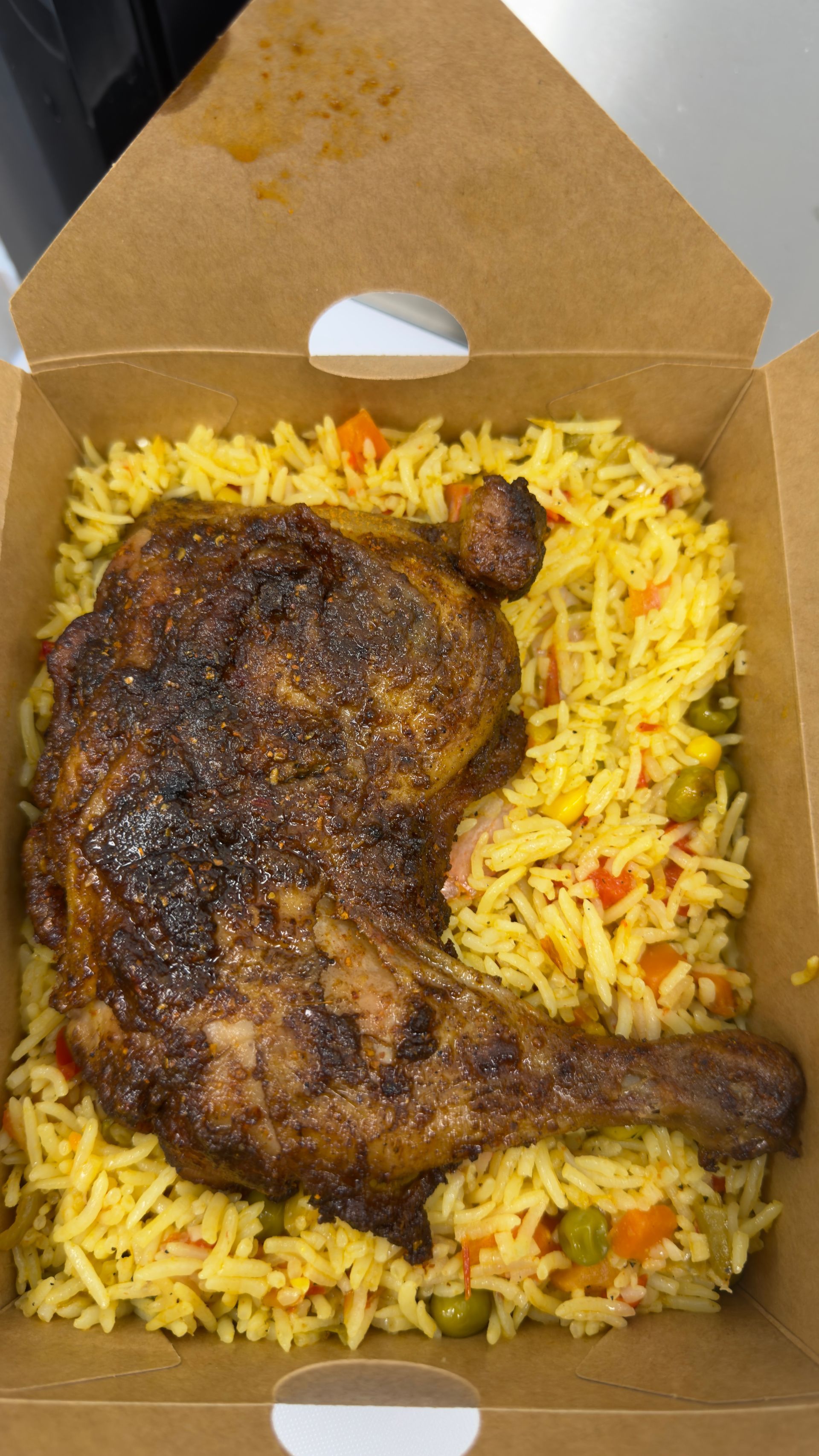
Jollof can make a meal on its own, but Nigerian jollof often comes with several companions.
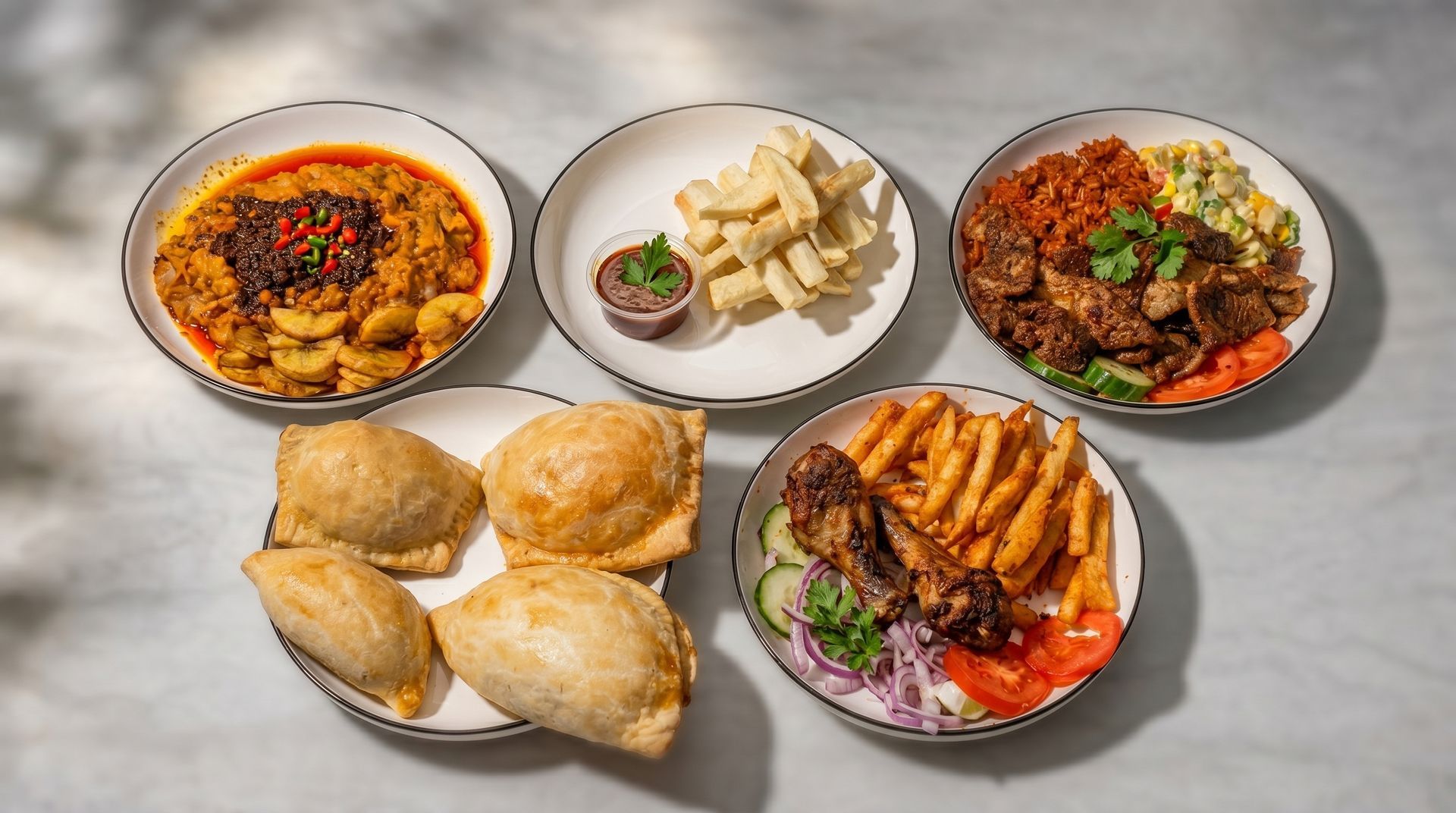
Popular pairings include:
- Chicken
- Beef
- Goat meat
- Fried or grilled fish
- Fried plantain, known as dodo
- Moi moi
- Nigerian salad
- Suya
For someone trying Nigerian food for the first time, jollof with chicken or suya and fried plantain gives you a good introduction to Nigerian flavours. You get savoury rice, smoky grilled meat and sweet plantain in one plate.
When Do Nigerians Eat Jollof Rice?
Almost anytime, but jollof has a special place at celebrations. You'll commonly see it at weddings, birthdays, naming ceremonies, graduations, Christmas gatherings and other large family events. That's why party jollof has such a strong reputation.
A large pot feeds a crowd, but the dish also fits the occasion. It looks good on a buffet table, pairs well with different proteins and appeals to a wide range of tastes. For many Nigerians, seeing jollof at a celebration simply feels right.
Where to Try Nigerian Jollof Rice in Windsor
If you're searching for Nigerian jollof rice in Windsor, StreetGrillz offers a local introduction to the Nigerian version. Located at 4185 Walker Road, Unit 100, StreetGrillz serves smoky Nigerian jollof alongside Nigerian street-food favourites such as beef and chicken suya, plantain and other dishes.
For someone new to Nigerian cuisine, jollof with suya and plantain makes a straightforward first meal.
You don't need to understand the entire history before trying it. Start with the rice. Then decide whether you want to enter the Jollof War.
Frequently Asked Questions
Is jollof rice Nigerian or Ghanaian?
Jollof is a broader West African food tradition. Its history connects strongly to the Senegambian region and Wolof culture, while Nigeria, Ghana and other countries developed their own versions.
What is Nigerian jollof rice made from?
Common ingredients include long-grain rice, tomatoes, peppers, onions, seasoning and spices. Recipes vary between households and regions.
What is the difference between Nigerian and Ghanaian jollof?
The rice, seasoning, cooking techniques and flavour profiles can differ. Nigerian jollof often uses long-grain parboiled rice and is strongly associated with smoky party jollof.
What goes well with Nigerian jollof rice?
Chicken, beef, goat, fish, suya, fried plantain, moi moi and Nigerian salad are common pairings.
Where can I get jollof rice in Windsor?
StreetGrillz serves Nigerian jollof rice at 4185 Walker Road, Unit 100, Windsor, Ontario.